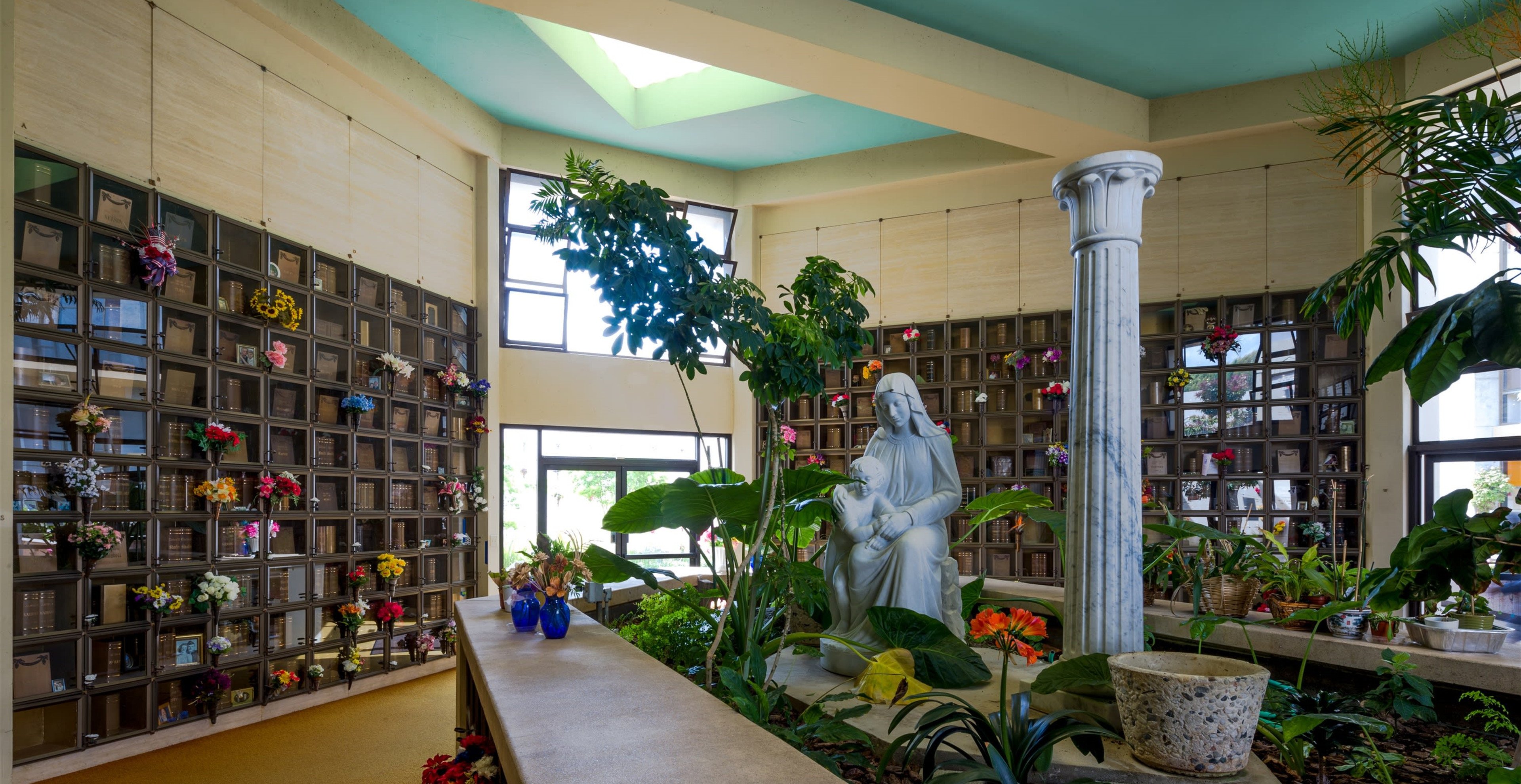
To Our Valued Community Members, We are reaching out to you to notify you of our Spring 2024 Cemetery Clean Up. You may have seen our signs posted around our property or our notifications on social media of this upcoming event. We will be breaking the Clean Up into 8 weeks during which time we will slowly move through our Memorial Park. This will be a time to not only clean and maintain grave spaces and gardens, but also to reset location finder pins, verify proper working of irrigation, address damage, and do regular lawn maintenance. We will be slightly adjusting how we clean during this clean up. Items that are on or are touching markers, and do not inhibit lawn maintenance will be left in place. Items that are on the grass and are not touching the marker or do inhibit lawn maintenance will be removed and placed directly on the marker. We will still be asking the community to temporarily remove decorations from their loved ones’ graves prior to our entry into the scheduled sections. Should family and friends be unavailable or unable to remove decorations, we will carefully move decorations. Care will be taken so as not to damage any articles placed on graves, and to keep all items contained and available. Decorations from larger, more heavily decorated gardens may need to be placed a small distance from the garden, but we will be placing them in a manner that makes them easy to find. Unfortunately, we will not be able to replace items on graves, but we will work diligently to treat all items with care and concern so as to make it as easy as possible to redecorate. Fresh flowers will be left in vases at the grave location. Starting the week of each garden’s clean up, we will be re-enforcing page 27 Section XIV.2.e-f AND page 27 Section XIV.2.f-g from our Rules and Regulations and General Information for Owner(s) of Interment Rights of Chapel of the Chimes Memorial Park and Funeral Home, Hayward, California (available in full upon request). Specifically, we will be re-enforcing the portion of the rule that prohibits fences (fencing often encroaches on neighboring graves and makes mowing difficult), as well as shells, stones, pebbles, etc. (these items become dangerous projectiles should a lawnmower inadvertently pass over them), unless granted prior written permission or written approval upon review. Additionally, this covers the rule that flags may not exceed 10” in total length (length is defined as the longest edge of the flag). Non-Approved flags will not be permitted. Approved vs. Non-Approved is at the discretion of Cemetery Management. It is not our intention to limit family and friends’ memorialization of loved ones’ grave spaces, but rather to bring Chapel of the Chimes back closer to the Rules and Regulations that allow us to properly maintain the grounds. A copy of the full Rules and Regulations is available from our front desk and is attached to this email. A map and schedule are attached for ease of use. The schedule is as follows: · March 10-16: Cypress I & II, Serenity Garden, Gulshane Rahmat · March 17-23: Brookside Cremation Garden, Garden of Hope, Sharray Shalom, Hillview · March 24-29: Bayview, Grandview, Bai En Yuan, Lotus Family Estates, Bai Ling Yuan, Garden of Love, Sunset Garden, Hillside Garden, Garden of Memory, Garden of Remembrance · March 30-April 6: No Clean Up · April 7-13: Garden of Mercy, Garden of Eternal Life, Mission Terrace · April 14-20: Garden of Noor I-V, Sharray Chayyim, Garden of Tranquility, Our Lady of Fatima I & II · April 21-27: Garden of Peace, Sunrise Garden I-III · April 28-May 4: Garden of Tribute, Garden of Honor I, Garden of Honor II, Serenity Terrace, Garden of Reflection · May 5-May 11: Sanctuary Circle, Jardines del Recuerdo, Santo Nino · INDOOR AND OUTDOOR MAUSOLEUMS WILL BE CLEANED AND POWERWASHED YEARLY DURING THE 2ND AND 3RD WEEKS OF JULY *Please be aware: we will remove and dispose of items that are obviously broken, are in extreme disrepair, or pose a hazard. Glass vases are not permitted in any garden, but we will make plastic vases available to you should you wish to trade in your glass ones. Any items not on the marker itself will be placed, to our best ability, on the marker. In cases of larger quantities of memorabilia, items will be boxed or bagged as usual. After the conclusion of the Spring Clean-Up, property not replaced on graves will be held in an easily accessible area for a time. We will bear in mind that for many families, regular visits are not possible, and property may be held until the next clean-up. Please reach out with questions or concerns and our staff will be able to assist. If you would like to be notified of future clean-ups, please submit a request with your contact information in the Contact Us portion of our website.